

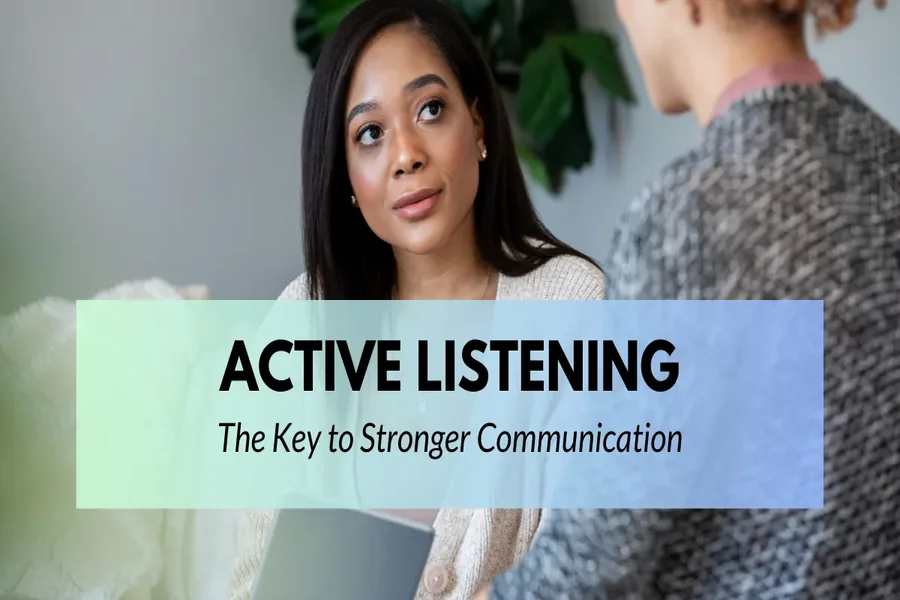
Great communication isn’t just about what we say – it’s about how we discover, understand, and interpret what other people mean. When we get that right, everything becomes easier: we understand others better, avoid confusion, cut disputes, and make clearer decisions. In a world where conversations can spiral into misunderstandings with a single careless assumption, developing the art of questioning and active listening can turn everyday exchanges into real progress.
And when you combine the ability to ask the right questions with the discipline of truly listening, the results go far beyond smoother communication. Problems get solved faster. Teams work better together. Confidence and respect grow on both sides. And perhaps most important of all, you end up with conversations that lead somewhere worthwhile – rather than ones that just circle around a point.
From this, you can see that great communication skills are central to everyone’s life. And the ability to question well and to listen actively are a core part of the mix. What makes them so powerful? Let’s take a look, one step at a time.
Step 1: Ask the Right Questions
Many people assume that questioning is about getting answers. But of course, it’s about getting the right answers. The best communicators don’t just throw questions into the air and hope something useful falls out—they plan and phrase their questions to uncover meaning, motivation, and perspective.
The difference between a weak question and a strong one can transform a conversation. A leading or closed question might shut down discussion: “You’re not happy with that, are you?” invites little more than a yes or no. But a well-framed open question – “What would make this work better for you?” – invites thought, explanation, and collaboration.
Tone and timing matter, too. Even the most perceptive question can land badly if it’s delivered with impatience or defensiveness. But when you approach questioning with curiosity and genuine interest, people instinctively open up. They share more of what they know, and what they feel, which gives you a much better picture of what’s going on.
The golden rule is simple: if you want clear answers, you need to ask clear, thoughtful questions that aim to clarify, not criticize. It’s surprising how many disagreements melt away when you simply make the effort to understand where the other person is coming from.
Step 2: Direct Your Conversations With the Funnel
Of course, asking good questions is only the start. To steer conversations productively, you also need structure – and that’s where the Funnel Technique comes in.
Think of it as a logical flow that takes a conversation from wide to focused. You begin broadly, gathering general thoughts and impressions, then gradually narrow your scope to extract the key details you need. It’s the same principle that good journalists, managers, and sales professionals use instinctively.
For example, you might start with, “How has this project gone so far?” before funnelling down to “What specific problems have held it back?” and then, finally, “What can we do differently next time to avoid those issues?”
The beauty of the funnel is that it reduces misunderstanding while giving people the space to talk. It naturally filters out unhelpful noise and builds toward the kind of conclusions everyone can agree on. Whether you’re problem-solving, negotiating, or coaching, doing this keeps discussions moving toward useful outcomes—without letting them wander off course.
And when done right, both sides walk away feeling heard, respected, and clear about next steps—a welcome change from the frustrating game of conversational tennis that so often happens instead.
Step 3: Understand That Listening Has Five Levels
Listening is deceptively simple but surprisingly easy to get wrong. Most of us think we’re listening when, in reality, we’re waiting to speak. Understanding the different levels of listening helps you recognize where you are on the scale – and how to move upwards toward true understanding.
The five levels range from minimal, distracted hearing all the way up to empathetic, active listening that engages fully with what the other person is saying. At the lowest levels, you might be nodding politely while your mind wanders elsewhere. As you climb higher, you focus not just on words but also tone, emotion, and context.
By the top level, you’re listening with intent, trying to see the world through the speaker’s eyes. You respond thoughtfully, check your interpretation, and ask clarifying questions when needed.
Reaching that level takes effort, but it transforms relationships. People notice when they’re truly heard—and they reciprocate. Mistakes get caught earlier. Feedback becomes constructive. And trust builds naturally, because people know that their opinions actually count.
It’s no exaggeration to say that understanding and applying the five levels of listening can turn ordinary conversations into genuine connections.
Step 4: Use Active Listening
Active listening isn’t a passive exercise – it’s dynamic. You’re not simply absorbing information; you’re showing engagement through body language, verbal cues, and follow-up questions. You paraphrase to confirm understanding, maintain eye contact, and signal openness.
Imagine how different your next meeting or discussion could be if everyone listened actively: fewer interruptions, fewer assumptions, and more collaboration. Instead of people rushing to make their own point, they’d be building on one another’s insights.
Active listening also saves time. When you give someone your full attention, you’re much less likely to end up re-explaining, correcting, or undoing misunderstandings later. It may take a bit more focus at the time, but the payoff is a smoother, faster route to agreement.
And here’s a subtle but important bonus—active listening improves your reputation. People who are good listeners tend to be seen as more approachable, trustworthy, and competent. That makes you someone others want to talk to, which is a major advantage whether you’re leading a team, talking to customers, or just getting things done more effectively.
Wrapping It Up
Good questioning and deep listening form the twin pillars of meaningful communication. When you apply both, you don’t just talk – you connect. Conversations become opportunities for discovery rather than encounters to work through.
You can read articles like this, or you can research using specialist forums. Or you can take a where you’ll practice crafting the right kinds of questions, guiding discussions logically through the Funnel, understanding how to climb the five levels of listening, and mastering the art of listening actively in every conversation that matters.
The outcome? Better understanding, less confusion, fewer disputes, and clearer decision-making—the exact benefits we began with. Because at the end of the day, when people truly listen and question with purpose, every conversation becomes a chance to build something a whole lot better.
