

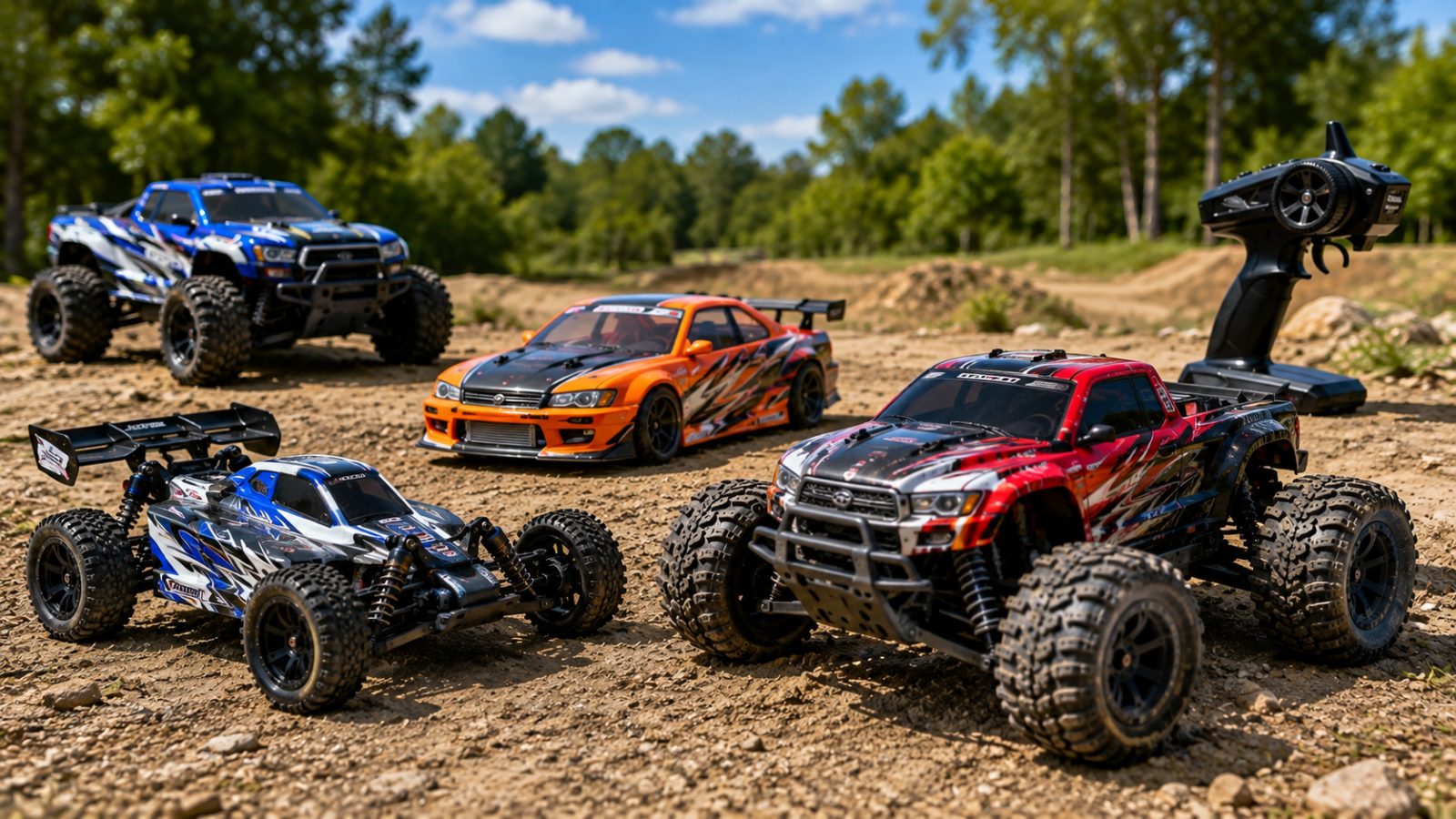
Remote-controlled vehicles have become much more than simple toys. Today, they are popular with children, teenagers, hobbyists, and adults who enjoy racing, driving, collecting, and learning how different mechanical systems work. For someone entering the hobby for the first time, however, the wide range of available models can make the buying process surprisingly difficult.
Different vehicles are designed for different driving styles. Some are built for speed on smooth surfaces, while others are better suited to dirt, grass, rocks, and uneven ground. There are also specialized models designed to slide around corners and reproduce the feeling of real motorsport.
Understanding the differences between these options makes it easier to choose a vehicle that matches a driver's experience level, budget, and preferred terrain.
Understanding the Different Types of RC Cars
The term remote-controlled car covers a broad range of vehicles. Before purchasing one, beginners should understand the main categories and what each type is designed to do.
An rc car is often the easiest starting point because electric models are generally simple to operate and maintain. They can be suitable for driveways, parks, tracks, and other relatively smooth surfaces. Electric power systems also tend to provide convenient starting and stopping, making them attractive to newcomers.
Other models are designed for specific activities. Drift vehicles, for example, are built around controlled sliding and cornering, while trucks usually offer greater ground clearance and more capability on rough surfaces.
What Makes a Good RC Car for Beginners?
A beginner-friendly model should be easy to control without becoming boring after a few weeks. This balance is important because a vehicle that is extremely basic may quickly lose its appeal, while an advanced racing machine can be difficult for a new driver to manage.
One of the first things to consider is speed. High speed sounds exciting, but beginners often learn more effectively with a vehicle that provides predictable acceleration and responsive steering. Excessive speed can make small driving mistakes turn into crashes.
Durability is equally important. New drivers are naturally more likely to hit walls, curbs, trees, or other obstacles. A strong chassis and replaceable components can make the hobby much less frustrating.
Battery life should also be considered. A model with a reasonable runtime allows the driver to enjoy longer sessions without constantly stopping to recharge.
Electric RC Cars vs. Nitro Models
Power systems have a major influence on the ownership experience. Electric vehicles are usually convenient because they can be charged and used without dealing with fuel, exhaust, or engine tuning.
Nitro-powered vehicles provide a different experience. They use small combustion engines and can appeal to hobbyists who enjoy the mechanical side of the hobby. The sound, smell, and engine characteristics create a more traditional motorsport feeling.
However, nitro models can require additional maintenance and adjustment. Beginners who want a straightforward introduction may therefore find electric vehicles easier to manage.
This does not mean that one power system is universally better. The right choice depends on whether the driver values convenience or enjoys the mechanical involvement associated with combustion-powered models.
Choosing an RC Drift Car for Smooth-Surface Driving
Drifting offers a completely different style of remote-controlled driving. Instead of simply trying to maintain maximum grip, the driver intentionally controls the vehicle while it slides through corners.
An rc drift car can be particularly appealing to people who enjoy precision and technique. Successful drifting requires careful throttle control, steering inputs, timing, and an understanding of how the vehicle responds when traction is reduced.
Smooth surfaces are generally preferred for this type of driving. Indoor floors, dedicated drift tracks, and clean paved areas can provide suitable environments.
Beginners should not expect perfect drifts immediately. Like real motorsport, controlled sliding takes practice. Learning how to enter a corner, initiate a slide, maintain the angle, and recover smoothly can become one of the most rewarding parts of the hobby.
Why RC Trucks Are Popular for Off-Road Driving
Drivers who want to explore grass, dirt, gravel, and uneven terrain may prefer a truck-style model.
rc trucks are commonly designed with features that make them more suitable for challenging surfaces. Larger tires, increased ground clearance, and stronger suspension can help them deal with terrain that would be difficult for a low-profile road vehicle.
Off-road driving can also provide greater variety. A driver can create a small obstacle course using ramps, rocks, wooden boards, and other safe objects. This turns an ordinary backyard or outdoor space into a miniature driving environment.
For beginners who are unsure about their preferred driving style, an off-road truck can be an interesting option because it can offer plenty of room for experimentation.
Motor and Battery Considerations
The motor is one of the most important components of an electric remote-controlled vehicle. Beginners will commonly encounter brushed and brushless systems.
Brushed motors can be suitable for entry-level use because they are generally straightforward and can provide adequate performance for casual driving. Brushless systems are typically associated with stronger performance, greater efficiency, and higher speeds.
Battery technology also affects performance. Different models may use different battery types, capacities, and connectors. A higher-capacity battery can potentially provide longer driving sessions, but its physical size and weight must be compatible with the vehicle.
A beginner should therefore avoid choosing a battery based solely on its capacity. Compatibility, charging requirements, weight, and safety are all important considerations.
Size Matters More Than Many Beginners Expect
RC vehicles come in different scales, and size can influence both performance and practicality.
Smaller models can be easier to store and transport. They may also work well in limited spaces. Larger vehicles can provide greater presence and may perform better on certain outdoor surfaces, but they require more storage room and can be more expensive to maintain.
A driver should consider where the vehicle will actually be used before selecting a scale. A very large model may be unnecessary for someone who mainly drives in a small backyard.
Maintenance Keeps an RC Vehicle Running Better
Regular maintenance is part of the hobby. Even a durable vehicle benefits from basic care after driving sessions.
Dirt and grass can collect around moving components, while impacts can loosen screws or affect alignment. Tires should be inspected regularly, and the chassis should be checked for visible damage.
After driving on dusty or muddy surfaces, cleaning becomes particularly important. Moisture should also be handled carefully because electronic components can be damaged if they are not designed for wet conditions.
Keeping a small collection of basic tools nearby can make maintenance easier. Over time, many hobbyists become comfortable replacing tires, suspension components, gears, and other parts themselves.
Safety and Responsible Driving
Remote-controlled vehicles can reach significant speeds, so responsible operation is essential. Drivers should choose open areas away from roads, pedestrians, pets, and fragile property.
Children should use appropriate supervision, particularly when operating faster or larger models. Batteries should also be charged using compatible equipment and handled according to the manufacturer's instructions.
Responsible driving protects both the vehicle and the people around it. It also makes the hobby more enjoyable because the driver can focus on improving skills rather than worrying about avoidable accidents.
How Beginners Can Improve Their Driving Skills
The best way to become a better RC driver is through consistent practice. Beginners can start by learning basic steering and throttle control at low speed.
Once comfortable, they can practice figure-eight patterns, controlled turns, reversing, braking, and obstacle avoidance. These simple exercises help develop coordination.
Drivers interested in racing can gradually introduce more advanced techniques, such as taking different racing lines and controlling acceleration through corners. Drift enthusiasts can focus on throttle modulation and maintaining consistent slide angles.
Progress usually comes from repetition rather than simply buying a faster vehicle.
Making the Right RC Purchase
The best remote-controlled vehicle is not necessarily the fastest or most expensive model. The right choice depends on where it will be driven, how much maintenance the owner is comfortable performing, and what type of experience the driver wants.
For straightforward recreational driving, an electric model can provide a practical introduction. Someone interested in controlled sliding may prefer a drift-focused vehicle, while drivers who enjoy outdoor terrain may find a truck more suitable.
By considering terrain, speed, durability, battery life, maintenance, size, and replacement parts, beginners can make a more informed decision and avoid buying a model that does not match their needs.
The RC hobby offers plenty of opportunities to grow. A beginner can start with basic driving, develop better control, learn simple maintenance, and eventually explore racing, drifting, customization, or off-road challenges. With the right vehicle and realistic expectations, the hobby can provide an engaging combination of entertainment, technical learning, and hands-on skill development.
